
News & AnalysisCareer

Interest rate cuts have been under consideration at the Bank of Mexico (Banxico) since September, Governor Victoria Rodriguez Ceja told El Financiero in an interview.
In an unexpected decision last week, Banxico lowered interest rates from 6.50% to 6.25%, a reduction of 25 basis points approved by a 3-2 vote. Deputy Governors Galia Borja and Jonathan Heath voted to leave rates unchanged as inflation continued to climb, although it remains within the 3% plus or minus 1% range.
Turning to the exchange rate, she noted that the currency remains stronger than the average USD/MXN exchange rate recorded in 2025. She added: “The importance of exchange rate behavior under our free-floating regime lies in its potential impact on inflation. And we know that the pass-through of exchange rate fluctuations to consumer prices in Mexico is small. This is even more noticeable in an environment of slack.”
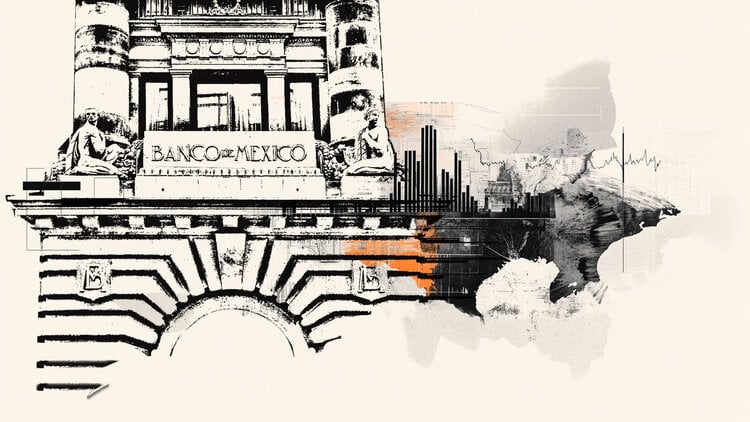
Looking ahead, she also said that “maintaining the rate at its current level – 6.25% – for an extended period will support the convergence of inflation to the target and will be adequate to address external macroeconomic challenges.”
As Mexico’s central bank, the Bank of Mexico, or Banxico, is responsible for setting monetary policy and safeguarding the value of the national currency, the Mexican Peso (MXN). Its primary aim is therefore to keep inflation low and stable within its target range: at or near 3%, the midpoint of a tolerance band running from 2% to 4%.
Setting interest rates is Banxico’s principal monetary policy tool. If inflation exceeds its target, the bank seeks to bring it down by increasing rates. This raises borrowing costs for households and businesses, cooling economic activity. By offering higher yields and making Mexico more attractive to investors, higher interest rates generally support the Mexican Peso (MXN). Lower rates, by contrast, tend to weigh on MXN. A key consideration is the interest rate differential with the USD, including expectations for Banxico’s rate decisions relative to those of the US Federal Reserve (Fed).
Decisions by the US Federal Reserve (Fed) have a substantial influence on Banxico’s monetary policy. The Mexican central bank meets eight times a year, with its policy committee normally convening a week after the Fed. This allows Banxico to respond to, and at times anticipate, the Federal Reserve’s policy measures. Following the Covid-19 pandemic, for instance, Banxico raised rates ahead of the Fed to reduce the risk of a sharp depreciation in the Mexican Peso (MXN) and avert capital outflows that could destabilise the country.







Phone: +61 2 8036 8388
Fax: +61 2 8036 8388
Email: support@tmgm.com



The information provided on this website is of a general nature only and does not constitute personal financial advice. Before acting on any information on this website, you should consider the suitability of the information in relation to your objectives, financial situation and needs. Investing in CFDs and FX Margin Contracts carries significant risks and is not suitable for all investors. You may lose more than your initial deposit. You do not own, or have, any interest in the underlying asset. We recommend that you seek independent advice and ensure you fully understand the risks involved before trading. It is important that you read and consider the disclosure document before you acquire any product listed on the website. The information and advertisements offered on this website are not intended for use by any person in any country or jurisdiction where such use would be contrary to local laws and regulations. The Products and Services offered on this website are not intended for residents of the United States, Malaysia and Thailand.
TMGM is authorized and regulated in various jurisdictions.
Trademax Australia Limited, trading as TMGM, is regulated by the Australian Securities and Investments Commission (ASIC), AFSL no. 436416 and is located at Level 28, One International Tower, 100 Barangaroo Avenue, 2000 Sydney, NSW Australia.
Email: support@tmgm.com.au
Trademax Global Limited, trading as TMGM, is authorized and regulated by the Vanuatu Financial Services Commission (VFSC), registration number 40356 and registered at 1276, Kumul Highway, Port Vila, Vanuatu, Republic of Vanuatu.
Email: support@tmgm.com
Trademax Global Markets (SE) Limited, trading as TMGM, is authorized and regulated by the Financial Services Authority (FSA) of Seychelles, with license number SD224. The company is registered at Office No 13, Providence Estate ABIS Centre, Mahe, Seychelles.
Email: support@tmgm.com
Trademax Global Markets (International) Pty Ltd, trading as TMGM, is authorized and regulated by the Financial Services Commission, Mauritius (FSC) with license no. GB22201012, and registered at 33, Edith Cavell Street C/o IQ EQ Fund Services (Mauritius) Ltd Port Louis, 11324 Mauritius.
Email: support@tmgm.com
Copyright © TMGM. All rights reserved

