

ECB recap: A hawkish hike despite downside growth risks
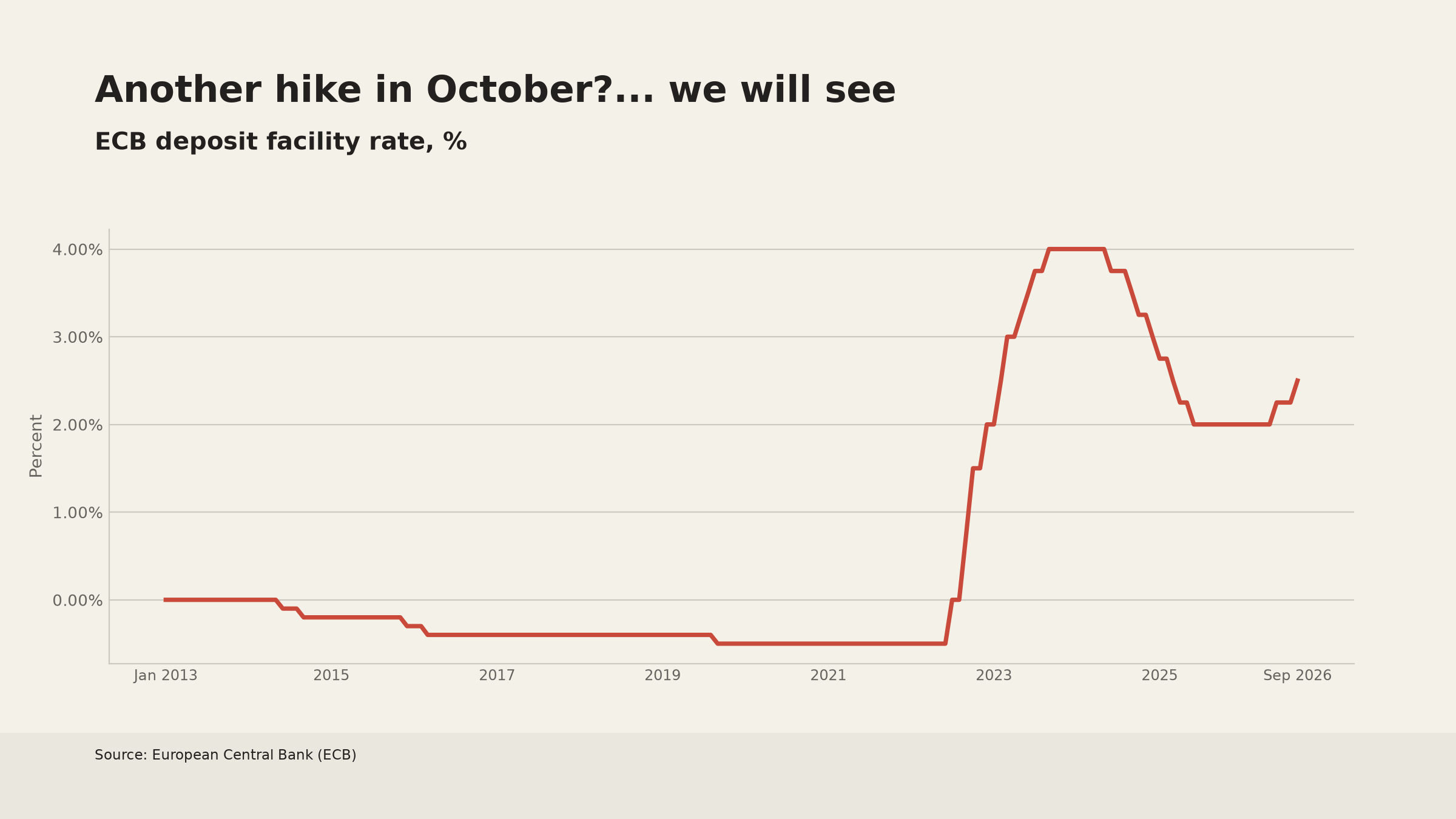
The European Central Bank (ECB) increased the Deposit Facility Rate to 2.50%, the Refinancing Rate to 2.65% and the Marginal Lending Facility to 2.90%, effective from September 16. The decision was accompanied by a clear warning that the outlook remained highly uncertain, with risks tilted to the upside for inflation and to the downside for growth.
The new staff projections see headline inflation averaging 3.0% in 2026, 2.5% in 2027 and 2.1% in 2028. The 2026 forecast was unchanged from June, but projections for 2027 and 2028 were revised higher. Inflation excluding energy and food is expected to remain above target, averaging 2.5% in 2026, 2.6% in 2027 and 2.3% in 2028.
Lagarde said the economy was proving resilient, supported by consumption, public investment and a recovery in services. IN addition, manufacturing remains solid, consumer confidence has rebounded and the labour market is robust, although employment growth is slowing. The near-term growth outlook has improved, with business and housing investment expected to provide further support.
The central bank nevertheless faces a difficult energy shock: higher prices are expected to feed through to core inflation and food costs, while a worsening conflict, supply disruptions or an unusually cold winter could push gas prices higher still. The ECB will therefore remain data-dependent and meeting-by-meeting (as per usual), without pre-committing to a particular rate path (as per usual).
Overall
This is a hawkish hike, but stagflationary risks remain. The ECB raised rates because it expects inflation to remain above target for longer, even as growth risks have increased. The combination of resilient domestic demand, higher inflation forecasts and the possibility of second-round effects leaves the door open to further tightening, although the Governing Council will wait for evidence on how persistent the energy shock becomes.














