

Trading
Explore a wide range of markets with competitive pricing, deep liquidity, and advanced trading tools.
Learn More 
Platform
Trade seamlessly with TMGM's powerful platform, built for speed, precision, and a superior trading experience.
Learn More Trading Platform
Academy
Learn the fundamentals of trading with beginner-friendly resources, including guides, webinars, and market insights.
Learn More News & Analysis
Get real-time market updates and expert analysis to stay ahead of trading opportunities
Learn More News & Analysis
About
Learn what sets TMGM apart — our global presence, regulatory strength, and commitment to innovation in trading.
Learn More Why Choose TMGM
Sponsorship
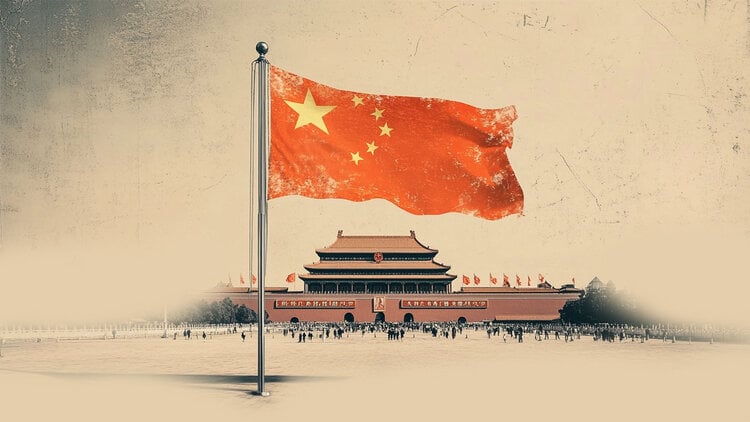
China Foreign Ministry: No one benefits from tariff and trade wars
Warning that “tariff and trade wars serve no one’s interests”, China’s Foreign Ministry spokesperson addressed the forthcoming United States (US) tariff announcement during Wednesday’s European session. Rejecting overcapacity as a justification, the spokesperson added, “The so-called of overcapacity does not really exist, and should not be used as a pretext for political manipulation.”
US-China Trade War: Key Questions Answered
When extreme protectionism by one side triggers an economic dispute between two or more countries, the conflict is generally described as a trade war. Trade barriers, including tariffs, prompt retaliatory restrictions, pushing up import costs and, consequently, the cost of living.
Early in 2018, President Donald Trump imposed trade barriers on China, accusing the Asian giant of unfair commercial practices and intellectual property theft. This marked the start of an economic conflict between the United States (US) and China. Beijing responded with tariffs on a range of US products, including automobiles and soybeans. After tensions intensified, the two countries signed the US-China Phase One trade deal in January 2020. Alongside structural reforms, the pact required other changes to China’s economic and trade framework and purported to restore stability and trust between the two nations. The Coronavirus pandemic subsequently shifted attention away from the dispute. Notably, however, President Joe Biden, who succeeded Trump, retained the tariffs and introduced additional levies.
A renewed round of tensions between the two countries has followed Donald Trump’s return to the White House as the 47th US President. While campaigning in the 2024 election, Trump promised 60% tariffs on China upon resuming office; he returned on January 20, 2025. His comeback is set to revive the US-China trade war from where it left off. Reciprocal measures are set to reshape the global economic landscape amid disruptions to global supply chains, reducing spending, particularly investment, and feeding directly into Consumer Price Index inflation.
POPULAR ARTICLES
1China Foreign Ministry: No one benefits from tariff and trade wars2Equities: Defensives preferred to tech as investors rotate – Danske Bank3Australian Dollar: Why has the inflation surprise failed to boost the Aussie? – Commerzbank4EUR/USD Price Forecast: Bearish Tone Persists Below 100-day SMA as Pair Weakens Below 1.09505Forex Today: Can the US Dollar sustain its rebound ahead of crucial PCE inflation data?6Euro: Pace of decline against US Dollar eases – UOB7GBP/USD Price Forecast: Can the Pair Overcome the Key Barrier at 1.3137?8Pi Network Price Forecast: Why is PI struggling to find relief as selling pressure continues?9Can MSCI–Prabowo talks halt Indonesian Rupiah losses as US PCE data looms?


Get Started!
Sign up and access the Global Markets in less than 3 minutes

Connect With Us









Contacts
Phone: +61 2 8036 8388
Fax: +61 2 8036 8388
Email: support@tmgm.com



The information provided on this website is of a general nature only and does not constitute personal financial advice. Before acting on any information on this website, you should consider the suitability of the information in relation to your objectives, financial situation and needs. Investing in CFDs and FX Margin Contracts carries significant risks and is not suitable for all investors. You may lose more than your initial deposit. You do not own, or have, any interest in the underlying asset. We recommend that you seek independent advice and ensure you fully understand the risks involved before trading. It is important that you read and consider the disclosure document before you acquire any product listed on the website. The information and advertisements offered on this website are not intended for use by any person in any country or jurisdiction where such use would be contrary to local laws and regulations. The Products and Services offered on this website are not intended for residents of the United States, Malaysia and Thailand.
TMGM is authorized and regulated in various jurisdictions.
Trademax Australia Limited, trading as TMGM, is regulated by the Australian Securities and Investments Commission (ASIC), AFSL no. 436416 and is located at Level 28, One International Tower, 100 Barangaroo Avenue, 2000 Sydney, NSW Australia.
Email: support@tmgm.com.au
Trademax Global Limited, trading as TMGM, is authorized and regulated by the Vanuatu Financial Services Commission (VFSC), registration number 40356 and registered at 1276, Kumul Highway, Port Vila, Vanuatu, Republic of Vanuatu.
Email: support@tmgm.com
Trademax Global Markets (SE) Limited, trading as TMGM, is authorized and regulated by the Financial Services Authority (FSA) of Seychelles, with license number SD224. The company is registered at Office No 13, Providence Estate ABIS Centre, Mahe, Seychelles.
Email: support@tmgm.com
Trademax Global Markets (International) Pty Ltd, trading as TMGM, is authorized and regulated by the Financial Services Commission, Mauritius (FSC) with license no. GB22201012, and registered at 33, Edith Cavell Street C/o IQ EQ Fund Services (Mauritius) Ltd Port Louis, 11324 Mauritius.
Email: support@tmgm.com
Copyright © TMGM. All rights reserved