

Торговля
Изучите широкий спектр рынков с конкурентными ценами, высокой ликвидностью и передовыми торговыми инструментами.
Узнать больше 
Платформа
Торгуйте без сбоев на мощной платформе TMGM, созданной для скорости, точности и превосходного торгового опыта.
Узнать больше Торговая платформа
Торговые инструменты
Академия
Изучите основы торговли с помощью материалов для начинающих, включая руководства, вебинары и аналитические обзоры рынка.
Узнать больше Новости и аналитика
Получайте актуальные рыночные обновления и экспертную аналитику, чтобы быть на шаг впереди торговых возможностей
Узнать больше Новости и аналитика
О нас
Узнайте, что отличает TMGM — наше глобальное присутствие, надежное регулирование и приверженность инновациям в трейдинге.
Узнать больше Почему выбирают TMGM
Спонсорство
Japanese Yen firms as US Dollar pares post-NFP gains
- USD/JPY starts the week lower as broad US Dollar weakness supports the Japanese Yen.
- Falling Oil prices ease US inflation concerns and drag the 10-year Treasury yield near a two-month low.
- Traders eye US inflation data for clues on a December Fed hike, while the BoJ signals scope for further tightening.
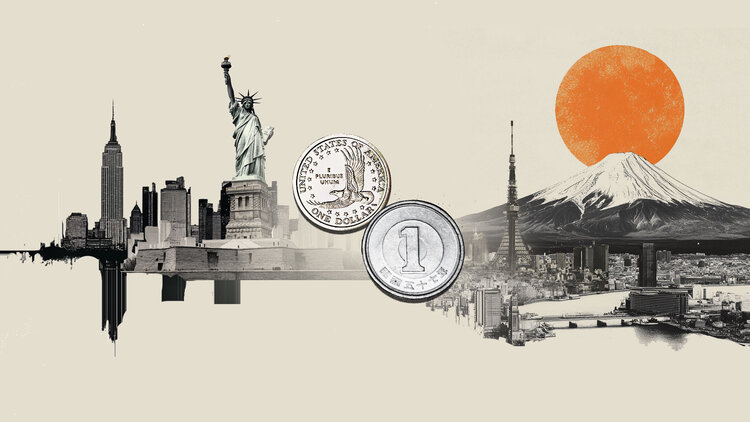
USD/JPY starts the week on the back foot as broad-based weakness in the US Dollar (USD) lends support to the Japanese Yen (JPY). At the time of writing, the pair trades around 157.91, down 0.36% on the day.
The Greenback comes under pressure as Oil prices extend their decline after US President Donald Trump downplayed the likelihood of renewed strikes on Iran. West Texas Intermediate (WTI) trades around $86 a barrel, down more than 3% on the day.
The pullback in crude prices eases some inflation concerns and helps keep US Treasury yields in check. The benchmark 10-year US Treasury yield is down 0.33% on the day at 4.83%, near a two-month low.
The US Dollar Index (DXY), which tracks the Greenback against a basket of six major currencies, trades around 101.80 after climbing to 102.36 following the stronger-than-expected US jobs report released on Friday.
US Nonfarm Payrolls (NFP) rose by 165K in October, more than double the 65K forecast, while the Unemployment Rate edged down to 4.1% from 4.2%. The figures reinforce expectations of another Federal Reserve (Fed) rate hike, with traders pricing in roughly an 80% chance of a quarter-point increase in December.
Brown Brothers Harriman’s Elias Haddad notes that the Dollar has surrendered part of its post-payrolls advance, with “USD pared back some of Friday’s strong October non-farm payrolls gains.” He adds that, looking ahead, “robust US economic activity, favorable labor market conditions and sticky underlying inflation back the Fed’s hawkish bias, keeping rate differentials supportive of USD,” reinforcing the view that upcoming US data will be critical in shaping expectations for the Fed’s policy path.
The US Consumer Price Index (CPI) is due on Tuesday, followed by the Producer Price Index (PPI) later in the week. A hotter-than-expected CPI reading could strengthen those bets and lend the Dollar some support.
In Japan, the Bank of Japan (BoJ) remains on a gradual tightening path. The central bank held its policy rate at 1.25% in October but signalled it was prepared to raise rates further. Board member Hajime Takata favoured a hike to 1.50%, while Governor Kazuo Ueda warned that inflation could overshoot the BoJ’s 2% target.
Separately, Japan’s Finance Ministry disclosed on Monday that authorities spent ¥7.98 trillion buying Yen on July 30, a record for a single day, according to Reuters. The scale of the operation helps explain why traders remain wary of further intervention when USD/JPY pushes higher.
US Dollar Price Today
The table below shows the percentage change of US Dollar (USD) against listed major currencies today. US Dollar was the strongest against the Swiss Franc.
| USD | EUR | GBP | JPY | CAD | AUD | NZD | CHF | |
|---|---|---|---|---|---|---|---|---|
| USD | -0.46% | -0.45% | -0.25% | -0.12% | -0.57% | -1.22% | 0.15% | |
| EUR | 0.46% | 0.00% | 0.21% | 0.34% | -0.12% | -0.76% | 0.60% | |
| GBP | 0.45% | -0.01% | 0.21% | 0.33% | -0.13% | -0.77% | 0.60% | |
| JPY | 0.25% | -0.21% | -0.21% | 0.13% | -0.32% | -0.97% | 0.39% | |
| CAD | 0.12% | -0.34% | -0.33% | -0.13% | -0.45% | -1.10% | 0.26% | |
| AUD | 0.57% | 0.12% | 0.13% | 0.32% | 0.45% | -0.64% | 0.72% | |
| NZD | 1.22% | 0.76% | 0.77% | 0.97% | 1.10% | 0.64% | 1.37% | |
| CHF | -0.15% | -0.60% | -0.60% | -0.39% | -0.26% | -0.72% | -1.37% |
The heat map shows percentage changes of major currencies against each other. The base currency is picked from the left column, while the quote currency is picked from the top row. For example, if you pick the US Dollar from the left column and move along the horizontal line to the Japanese Yen, the percentage change displayed in the box will represent USD (base)/JPY (quote).
Лучшие статьи
1British Pound reclaims 1.3400 as Iran war fears ease ahead of US CPI2Fed's Goolsbee warns services inflation goes beyond tariff pressure3United States Wholesale Inventories came in at 0.7%, above expectations (0.6%) in September4Japanese Yen firms as US Dollar pares post-NFP gains5USD/INR: Stronger Rupee on Oil slide – Societe Generale6Japanese Yen: On the turn with policy support – Rabobank7US Dollar Index (DXY) extends reversal below 102.00 as risk appetite improves8Euro remains rangebound against British Pound as traders eye UK and Eurozone GDP9WTI OIl extends losses nearing $87.00 amid efforts to resume US-Iran negotiations


Начать!
Зарегистрируйтесь и получите доступ к глобальным рынкам менее чем за 3 минуты

Свяжитесь с нами









Контакты
Телефон: +61 2 8036 8388
Факс: +61 2 8036 8388
Эл. почта: support@tmgm.com
Веб-сайт: https://www.tmgmsea.com



Информация, представленная на этом веб-сайте, носит исключительно общий характер и не является персональной финансовой консультацией. Прежде чем действовать на основании любой информации на этом веб-сайте, вам следует оценить ее уместность с учетом ваших целей, финансового положения и потребностей. Инвестирование в CFD и маржинальные контракты на FX сопряжено со значительными рисками и подходит не всем инвесторам. Вы можете потерять больше, чем ваш первоначальный депозит. Вы не владеете базовым активом и не имеете в нем какой-либо доли. Мы рекомендуем вам обратиться за независимой консультацией и убедиться, что вы полностью понимаете связанные с этим риски, прежде чем начинать торговлю. Важно прочитать и принять во внимание документ с раскрытием информации, прежде чем приобретать любой продукт, указанный на веб-сайте. Информация и рекламные материалы, предлагаемые на этом веб-сайте, не предназначены для использования любым лицом в любой стране или юрисдикции, где такое использование противоречило бы местным законам и нормативным актам. Продукты и услуги, предлагаемые на этом веб-сайте, не предназначены для резидентов США, Малайзии и Таиланда.
TMGM уполномочена и регулируется в различных юрисдикциях.
Trademax Australia Limited, работающая под брендом TMGM, регулируется Australian Securities and Investments Commission (ASIC), AFSL № 436416 и находится по адресу: Level 28, One International Tower, 100 Barangaroo Avenue, 2000 Sydney, NSW Australia.
Email: support@tmgm.com.au
Trademax Global Limited, работающая под брендом TMGM, уполномочена и регулируется Vanuatu Financial Services Commission (VFSC), регистрационный номер 40356, и зарегистрирована по адресу: 1276, Kumul Highway, Port Vila, Vanuatu, Republic of Vanuatu.
Email: support@tmgm.com
Trademax Global Markets (SE) Limited, работающая под брендом TMGM, уполномочена и регулируется Financial Services Authority (FSA) Сейшельских Островов, номер лицензии SD224. Компания зарегистрирована по адресу: Office No 13, Providence Estate ABIS Centre, Mahe, Seychelles.
Email: support@tmgm.com
Trademax Global Markets (International) Pty Ltd, работающая под брендом TMGM, уполномочена и регулируется Financial Services Commission, Mauritius (FSC), лицензия № GB22201012, и зарегистрирована по адресу: 33, Edith Cavell Street C/o IQ EQ Fund Services (Mauritius) Ltd Port Louis, 11324 Mauritius.
Email: support@tmgm.com
Авторское право © TMGM. Все права защищены