

Trading
Esplora una vasta gamma di mercati con prezzi competitivi, elevata liquidità e strumenti di trading avanzati.
Scopri di più 
Piattaforma
Fai trading senza problemi con la potente piattaforma di TMGM, fatta apposta per essere veloce, precisa e per darti un'esperienza di trading fantastica.
Scopri di più Piattaforma di trading
Strumenti di trading
Academy
Impara le basi del trading con le risorse per principianti, tra cui guide, webinar e approfondimenti sul mercato.
Scopri di più Notizie e analisi
Ricevi aggiornamenti sul mercato in tempo reale e analisi di esperti per cogliere le opportunità di trading
Scopri di più Notizie e analisi
Chi siamo
Scopri cosa rende TMGM speciale: la nostra presenza globale, la nostra forza normativa e il nostro impegno per l'innovazione nel trading.
Scopri di più Perché scegliere TMGM
Sponsorizzazioni
Japanese Yen nudges lower despite a hawkish BoJ, intervention warnings
- USD/JPY edges up to the 157.70 area from Friday's lows below 157.00.
- The minutes of September's BoJ meeting revealed that some policymakers called for faster rate hikes.
- Strong US data, hot inflation and Fed tightening hopes are keeping the US Dollar buoyed.
The Japanese Yen (JPY) is trimming gains from Friday’s rebound against the US Dollar (USD) on Monday. The hawkish minutes by the Bank of Japan (BoJ) and growing signals that the US and Japan might launch a new joint intervention have failed to spook Yen bears, who are pushing the USD/JPY pair to levels towards the 158.00 level.
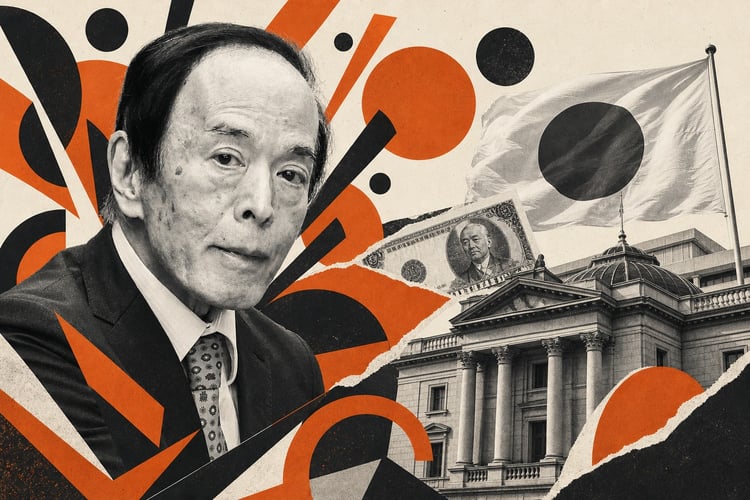
The minutes of the BoJ’s monetary policy meeting, released earlier on Monday, revealed that some policymakers advocated for faster interest rate increases in September, amid growing concerns about the mounting inflationary pressures. This has fed hopes that the bank will keep tightening its monetary policy over the coming months.
The BoJ raised its benchmark interest rate by 25 basis points to a 31-year high of 1.25%, but two policymakers voted to leave it on hold, which cast doubt about the scope of the hawkish cycle and disappointed investors. The Yen has depreciated more than 1.5% against the USD ever since.
US authorities show concern about Yen weakness
The Yen pared some losses on Friday as Japanese Finance Minister Satsuki Katayama affirmed that US President Donald Trump had expressed his concern about Yen weakness in a summit with Prime Minister Sanae Takaichi on the sidelines of the United Nations General Assembly last week.
Takaichi confirmed those coments later in the day, while Katayama added that she held a phone call with the US Secretary of State, Scott Bessent, in which they reaffirmed their commitment against excess volatility and disorderly moves on the Yen. This is a rather explicit warning of another joint intervention like the one that sent the Yen surging on July 31.
The fundamental background, however, remains USD-supportive. A rift of strong US data and hot inflationary pressures has boosted US Treasury yields to multi-decade highs, prompting investors to practically fully price in at least another interest rate hike by the Federal Reserve (Fed) before year-end.
Investors will be attentive to a slew of US macroeconomic indicators to confirm these views later this week, with the US Personal Consumption Expenditures (PCE) Price Index on Wednesday and September’s Nonfarm Payrolls (NFP) report on Friday likely to raise particular interest.
Japanese Yen FAQs
The Japanese Yen (JPY) is one of the world’s most traded currencies. Its value is broadly determined by the performance of the Japanese economy, but more specifically by the Bank of Japan’s policy, the differential between Japanese and US bond yields, or risk sentiment among traders, among other factors.
One of the Bank of Japan’s mandates is currency control, so its moves are key for the Yen. The BoJ has directly intervened in currency markets sometimes, generally to lower the value of the Yen, although it refrains from doing it often due to political concerns of its main trading partners. The BoJ ultra-loose monetary policy between 2013 and 2024 caused the Yen to depreciate against its main currency peers due to an increasing policy divergence between the Bank of Japan and other main central banks. More recently, the gradually unwinding of this ultra-loose policy has given some support to the Yen.
Over the last decade, the BoJ’s stance of sticking to ultra-loose monetary policy has led to a widening policy divergence with other central banks, particularly with the US Federal Reserve. This supported a widening of the differential between the 10-year US and Japanese bonds, which favored the US Dollar against the Japanese Yen. The BoJ decision in 2024 to gradually abandon the ultra-loose policy, coupled with interest-rate cuts in other major central banks, is narrowing this differential.
The Japanese Yen is often seen as a safe-haven investment. This means that in times of market stress, investors are more likely to put their money in the Japanese currency due to its supposed reliability and stability. Turbulent times are likely to strengthen the Yen’s value against other currencies seen as more risky to invest in.
ARTICOLI POPOLARI
1Australian Dollar: Hawkish RBA hike expectations – ING2USD/CAD Price Forecast: Holds gains above 1.4150, while technicals flag overbought risk3Indonesian Rupiah: Rate support erodes as outflows resume – MUFG4Forex Today: Gold slumps below $4,200 on hawkish Fed outlook, Mideast tensions5Silver Price Forecast: XAG/USD falls like house of cards on Fed’s hawkish narrative6Euro: Rate uncertainty and energy costs weigh – HSBC7Japanese Yen nudges lower despite a hawkish BoJ, intervention warnings8Solana Price Forecast: Bulls hold control as ETF inflows strengthen and RWAs, stablecoin metrics hit records9USD/JPY: Weekly review highlights Dollar strength – MUFG
QUOTAZIONI IN DIRETTA


TUTTO SU FOREX
Miglior Broker Forex: Come Scegliere la Migliore Piattaforma di Trading Forex
Le 15 Coppie di Valute Forex Più Scambiate
Orari del mercato forex: a che ora apre il mercato forex?
Il Miglior Software Gratuito per il Backtesting Forex per un Test Affidabile delle Strategie
Cos'è lo Scalping nel Forex? Esplora Strategie e Indicatori per lo Scalping
Cos'è un Pip? Guida Pratica ai Pip Forex, al Valore del Pip e ai Costi di Trading
Come Iniziare a Fare Trading Forex per Principianti: Una Guida Passo Dopo Passo
Cos'è il Forex trading e come funziona
Inizia ora!
Registrati e accedi ai mercati globali in meno di 3 minuti

Contattaci









Contatti
Telefono: +61 2 8036 8388
Fax: +61 2 8036 8388
Email: support@tmgm.com



Le informazioni fornite su questo sito web hanno esclusivamente carattere generale e non costituiscono consulenza finanziaria personalizzata. Prima di agire sulla base di qualsiasi informazione presente su questo sito web, dovresti valutarne l'adeguatezza in relazione ai tuoi obiettivi, alla tua situazione finanziaria e alle tue esigenze. Investire in CFD e contratti FX con margine comporta rischi significativi e non è adatto a tutti gli investitori. Potresti perdere più del tuo deposito iniziale. Non possiedi, né hai, alcun interesse nell'attività sottostante. Ti raccomandiamo di richiedere una consulenza indipendente e di assicurarti di comprendere pienamente i rischi connessi prima di fare trading. È importante leggere e valutare il documento informativo prima di acquisire qualsiasi prodotto elencato sul sito web. Le informazioni e le pubblicità offerte su questo sito web non sono destinate all'uso da parte di persone in paesi o giurisdizioni in cui tale utilizzo sarebbe contrario alle leggi e ai regolamenti locali. I Prodotti e Servizi offerti su questo sito web non sono destinati ai residenti degli Stati Uniti, della Malesia e della Thailandia.
TMGM è autorizzata e regolamentata in diverse giurisdizioni.
Trademax Australia Limited, operante come TMGM, è regolamentata dalla Australian Securities and Investments Commission (ASIC), AFSL n. 436416 e si trova a Level 28, One International Tower, 100 Barangaroo Avenue, 2000 Sydney, NSW Australia.
Email: support@tmgm.com.au
Trademax Global Limited, operante come TMGM, è autorizzata e regolamentata dalla Vanuatu Financial Services Commission (VFSC), numero di registrazione 40356 e registrata a 1276, Kumul Highway, Port Vila, Vanuatu, Repubblica di Vanuatu.
Email: support@tmgm.com
Trademax Global Markets (SE) Limited, operante con il nome TMGM, è autorizzata e regolamentata dalla Financial Services Authority (FSA) delle Seychelles, con numero di licenza SD224. La società è registrata presso l’Ufficio n. 13, Providence Estate ABIS Centre, Mahé, Seychelles.
Email: support@tmgm.com
Trademax Global Markets (International) Pty Ltd, operante come TMGM, è autorizzata e regolamentata dalla Financial Services Commission, Mauritius (FSC) con licenza n. GB22201012, e registrata al 33, Edith Cavell Street C/o IQ EQ Fund Services (Mauritius) Ltd Port Louis, 11324 Mauritius.
Email: support@tmgm.com
Copyright © TMGM. Tutti i diritti riservati