

Trading
Explore a wide range of markets with competitive pricing, deep liquidity, and advanced trading tools.
Learn More 
Platform
Trade seamlessly with TMGM's powerful platform, built for speed, precision, and a superior trading experience.
Learn More Trading Platform
Academy
Learn the fundamentals of trading with beginner-friendly resources, including guides, webinars, and market insights.
Learn More News & Analysis
Get real-time market updates and expert analysis to stay ahead of trading opportunities
Learn More News & Analysis
About
Learn what sets TMGM apart — our global presence, regulatory strength, and commitment to innovation in trading.
Learn More Why Choose TMGM
Sponsorship
October US Nonfarm Payrolls growth expected to accelerate
- 65K is the expected increase in US Nonfarm Payrolls for October. That would follow September’s disappointing gain of 29K.
- At 4.2%, the Unemployment Rate is projected to remain steady.
- Despite widespread expectations for a 25 bps rate hike in December, the employment figures could affect the US Dollar’s valuation.
65K jobs are forecast to have been added in October. The United States (US) Bureau of Labor Statistics (BLS) will publish the Nonfarm Payrolls (NFP) report on Friday at 13:30 GMT. The projected gain compares with 29K in the preceding month.

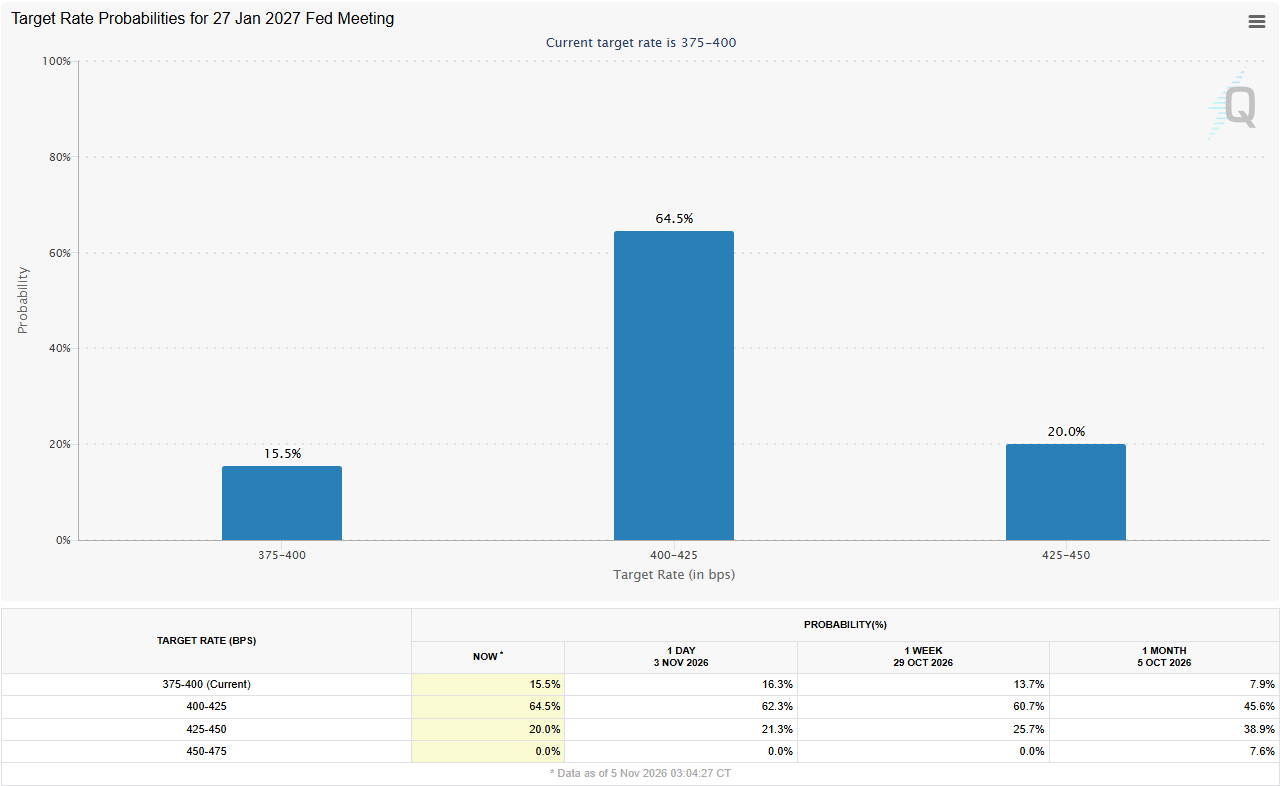
A 25 basis points (bps) increase in the policy rate by the Federal Reserve (Fed) in December remains the broad market expectation. However, details within the employment report could reshape views on the policy outlook for early 2027, influencing the US Dollar’s (USD) valuation.
Nonfarm Payrolls: Key Report Expectations
For October, investors anticipate an NFP increase of 65K, compared with September’s disappointing gain of 29K. Forecasts put the Unemployment Rate at an unchanged 4.2%. Monthly wage inflation, measured by the change in Average Hourly Earnings (AHE), is expected to accelerate from 0.1% to 0.3%.
Following its October policy meeting, the Fed kept the policy rate within the 3.75%-4% range, in line with expectations. Fed Chair Kevin Warsh characterised labour market conditions as “positive,” at the subsequent press conference and said policymakers’ discussions centred mainly on the price stability mandate. A material repricing of next month’s Fed rate decision therefore appears unlikely without a substantial downside surprise in the employment figures.
TD Securities expects the US Dollar to enter a consolidation phase towards year-end after its steep rally since September. Reaffirming its outlook, the bank states that “after a sharp rally since September, our base case has been for the USD to see a modest relief selloff into year-end, similar to how the USD had performed following the 2018 US midterm election.” Forthcoming labour market releases could prove decisive, according to its strategists, who note that “a lower-than-consensus payrolls number could provide an additional catalyst for the USD retracement to take shape.” Against that backdrop, they “expect October NFP to remain subdued at 40k after job gains moderated to 29k in September,” supporting their view that weaker US figures would help prolong the Dollar’s post-election retreat.
Economic Data
Nonfarm Payrolls: Monthly Job Creation
Published by the US Bureau of Labor Statistics (BLS), Nonfarm Payrolls measures the number of jobs added across US non-agricultural businesses in the preceding month. Month-to-month payroll changes can fluctuate sharply. The figures are also subject to substantial revisions, which can generate volatility across the foreign exchange market. A strong reading is generally considered bullish for the US Dollar (USD), whereas a weak result is viewed as bearish. However, revisions to earlier months and the Unemployment Rate carry as much relevance as the headline number. The market response consequently reflects investors’ assessment of the BLS report in its entirety.
Find out more.Next scheduled release: Fri 6 Nov 2026 13:30
Release frequency: Every month
Consensus forecast: 65K
Previous reading: 29K
Data source: US Bureau of Labor Statistics
On the first Friday after each reporting month, the US releases its monthly jobs report. Widely regarded as the most important economic indicator for forex traders, its measure of employment changes closely tracks overall economic performance and draws scrutiny from policymakers. The Federal Reserve considers labour market conditions when setting policy, reflecting its full-employment mandate, and those decisions affect currencies. Although several leading indicators inform forecasts, Nonfarm Payrolls frequently surprise markets and generate sizeable volatility. Readings above consensus generally support the USD.
October US Nonfarm Payrolls: Implications for EUR/USD
Two years remained in Donald Trump's presidency as Democrats secured control of the US Congress. Their midterm election victories in both the Senate and the House prompted heavy US Dollar selling midweek. Following the election outcome, greater optimism over an easing of the Middle East conflict also drove a steep decline in crude oil prices, reducing concerns about persistent inflation.
A further near-term Dollar correction has limited scope, according to ING analysts. They cite “a still-resilient US economy and at least one more rate hike from the Federal Reserve” as the main sources of support. The analysts nevertheless see potential for the balance of risks to change over the medium term, cautioning that “the Dollar could see a little more weakness into 2027, however, if an emboldened Democratic Party takes greater issue with Republican policy, including deregulation and the AI build-out.”
30K or below would be a disappointing NFP result. Such a reading could intensify USD selling ahead of the weekend by prompting markets to rule out a January Fed rate increase. The CME FedWatch Tool currently puts the probability of that move at around 20%. Under this scenario, EUR/USD could extend its gains for the week.
An NFP reading above 80K, by contrast, would represent a substantial upside surprise and could initially lift the USD, triggering a downward correction in EUR/USD. That support might not persist, however. With key US inflation figures due next week, investors could avoid sizeable positions, limiting any lasting boost to the USD from the employment report.
For a short technical assessment of EUR/USD, FXStreet European Session Lead Analyst Eren Sengezer comments:
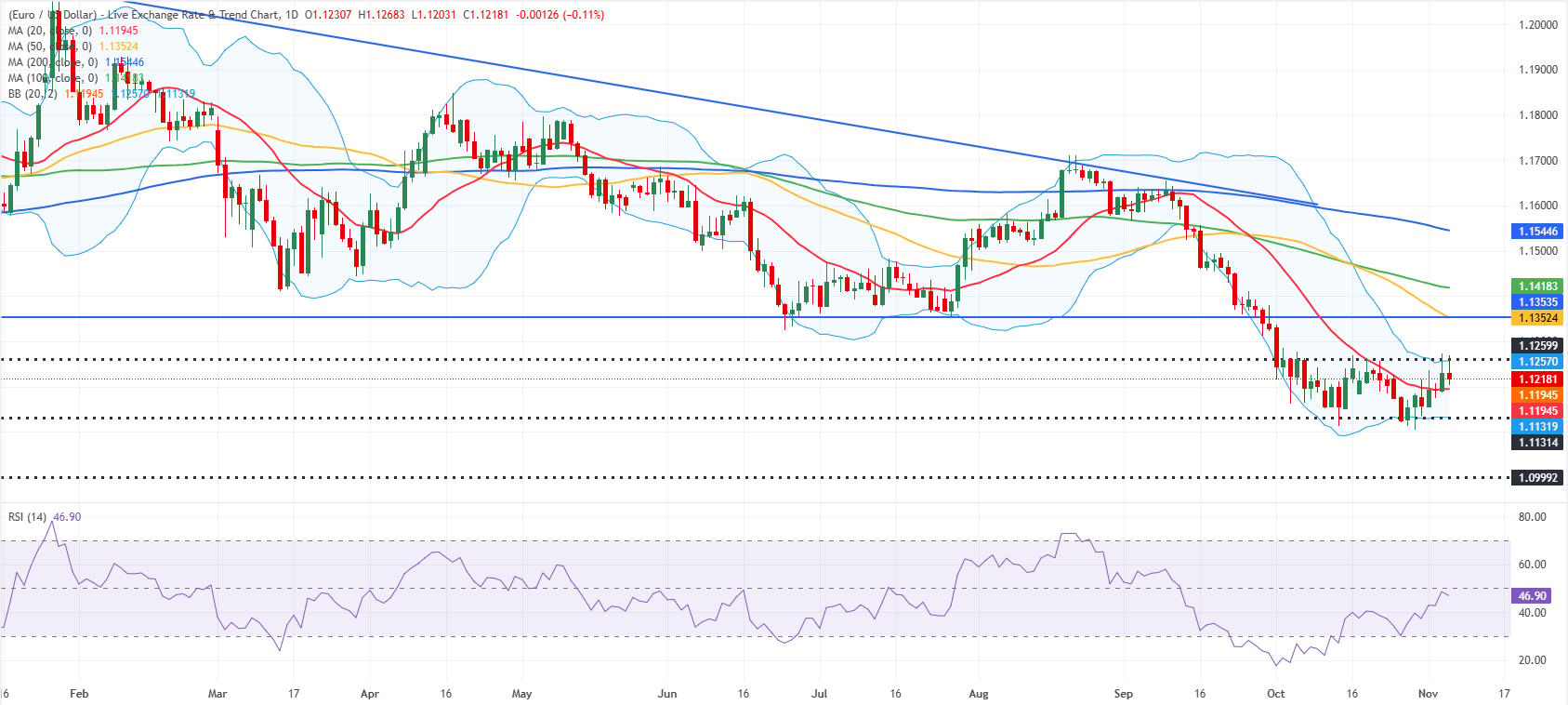
“The near-term technical outlook suggests that EUR/USD is struggling to complete a bullish reversal. The pair holds above the 20-day Simple Moving Average (SMA) but the Relative Strength Index (RSI) indicator on the daily chart stays slightly below 50.”
“On the upside, 1.1350 (static level, 50-day Simple Moving Average (SMA), former support) aligns as the first resistance level ahead of 1.1420 (100-day SMA). A daily close above the latter could attract technical buyers and open the door for an extended bullish action toward 1.1540 (200-day SMA).”
“Looking south, the first support level could be spotted at 1.1130 (lower arm of the Bollinger Bands) before 1.1000 (static level, round level).”
Nonfarm Payrolls: key questions answered
Within the monthly employment report published by the US Bureau of Labor Statistics, Nonfarm Payrolls (NFP) track the previous month's change in US employment. The measure excludes jobs in the farming sector.
By indicating progress towards full employment and 2% inflation, Nonfarm Payrolls can shape Federal Reserve policy decisions. A comparatively strong NFP reading points to more people working, earning more and therefore probably spending more. Conversely, a weak reading could suggest that people are having difficulty finding jobs. To counter high inflation associated with low unemployment, the Fed typically increases interest rates. When the labour market stagnates, it generally cuts rates to encourage activity.
The US Dollar typically strengthens when Nonfarm Payrolls exceed forecasts and weakens when they fall short, reflecting a generally positive correlation. This relationship works through the effects of NFP on inflation, expectations for monetary policy and interest rates. Stronger payrolls usually point to tighter Federal Reserve policy, which supports the USD.
Gold prices typically move inversely to Nonfarm Payrolls. An above-forecast reading therefore tends to weigh on Gold, while a below-forecast result tends to support it. Stronger NFP generally bolster the USD. Since Gold, like most major commodities, is priced in US Dollars, a stronger currency means fewer Dollars are needed to purchase an ounce. Higher interest rates, typically supported by stronger NFP, also make Gold less appealing relative to holding cash, which at least generates interest.
Other elements of the broader employment report can overshadow Nonfarm Payrolls, which represent just one component. For example, markets have sometimes responded to above-forecast NFP and below-forecast Average Weekly Earnings by treating the earnings decline as deflationary, rather than focusing on the headline figure's potentially inflationary implications. The Participation Rate and Average Weekly Hours can also shape the response, though only during unusual episodes such as the “Great Resignation” or the Global Financial Crisis.
POPULAR ARTICLES
10.8110 stays in focus for Swiss Franc versus US Dollar - UOB2Silver price today: FXStreet data shows silver moving higher3October US Nonfarm Payrolls growth expected to accelerate4Gold: Cautious optimism amid consolidation – OCBC5USD/CAD Price Forecast: Pair Shows Strength Ahead of US and Canadian Jobs Data60.8185 caps USD/CHF upside as bearish pressure eases: Price forecast7Risk aversion keeps British Pound under pressure against Yen despite hawkish BoE8US Dollar finds safe-haven support as AI shares retreat – MUFG9Polish Zloty: PLN outlook remains weak despite hawkish rhetoric – Commerzbank

Get Started!
Sign up and access the Global Markets in less than 3 minutes

Connect With Us









Contacts
Phone: +61 2 8036 8388
Fax: +61 2 8036 8388
Email: support@tmgm.com



The information provided on this website is of a general nature only and does not constitute personal financial advice. Before acting on any information on this website, you should consider the suitability of the information in relation to your objectives, financial situation and needs. Investing in CFDs and FX Margin Contracts carries significant risks and is not suitable for all investors. You may lose more than your initial deposit. You do not own, or have, any interest in the underlying asset. We recommend that you seek independent advice and ensure you fully understand the risks involved before trading. It is important that you read and consider the disclosure document before you acquire any product listed on the website. The information and advertisements offered on this website are not intended for use by any person in any country or jurisdiction where such use would be contrary to local laws and regulations. The Products and Services offered on this website are not intended for residents of the United States, Malaysia and Thailand.
TMGM is authorized and regulated in various jurisdictions.
Trademax Australia Limited, trading as TMGM, is regulated by the Australian Securities and Investments Commission (ASIC), AFSL no. 436416 and is located at Level 28, One International Tower, 100 Barangaroo Avenue, 2000 Sydney, NSW Australia.
Email: support@tmgm.com.au
Trademax Global Limited, trading as TMGM, is authorized and regulated by the Vanuatu Financial Services Commission (VFSC), registration number 40356 and registered at 1276, Kumul Highway, Port Vila, Vanuatu, Republic of Vanuatu.
Email: support@tmgm.com
Trademax Global Markets (SE) Limited, trading as TMGM, is authorized and regulated by the Financial Services Authority (FSA) of Seychelles, with license number SD224. The company is registered at Office No 13, Providence Estate ABIS Centre, Mahe, Seychelles.
Email: support@tmgm.com
Trademax Global Markets (International) Pty Ltd, trading as TMGM, is authorized and regulated by the Financial Services Commission, Mauritius (FSC) with license no. GB22201012, and registered at 33, Edith Cavell Street C/o IQ EQ Fund Services (Mauritius) Ltd Port Louis, 11324 Mauritius.
Email: support@tmgm.com
Copyright © TMGM. All rights reserved