

Trading
Explore a wide range of markets with competitive pricing, deep liquidity, and advanced trading tools.
Learn More 
Platform
Trade seamlessly with TMGM's powerful platform, built for speed, precision, and a superior trading experience.
Learn More Trading Platform
Academy
Learn the fundamentals of trading with beginner-friendly resources, including guides, webinars, and market insights.
Learn More News & Analysis
Get real-time market updates and expert analysis to stay ahead of trading opportunities
Learn More News & Analysis
About
Learn what sets TMGM apart — our global presence, regulatory strength, and commitment to innovation in trading.
Learn More Why Choose TMGM
Sponsorship
Ripple wins US banking approval: A turning point for the crypto sector?
Something quietly big happened in the crypto market this week. Ripple, the leading provider of blockchain solutions across traditional and digital finance, received final approval from the Office of the Comptroller of the Currency (OCC) to launch Ripple National Trust Bank (RNTB) on Monday. Following conditional approval from the OCC in December 2025, the company now has the green light to operate its own federally supervised national bank.
What does Ripple’s banking approval really cover?
In simple terms, this means the new bank will hold and manage the reserves backing Ripple’s RLUSD stablecoin, acting as a trustee for those assets and offering digital-asset custody services to institutions.
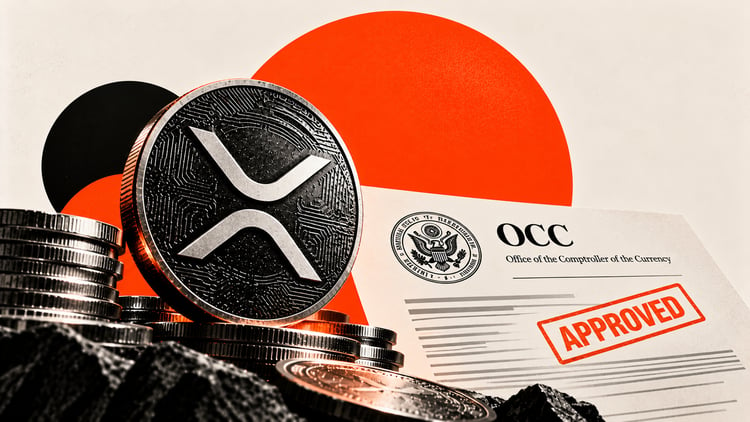
Meanwhile, Standard Custody & Trust Company (SCTC), Ripple’s entity regulated by the New York Department of Financial Services (NYDFS), will continue to issue RLUSD. The new federal layer adds stronger oversight on the reserve and custody side.
Ripple’s CEO Brad Garlinghouse said: “For years, we’ve said crypto and banks work better together. Final approval for Ripple National Trust Bank is what that looks like in practice.”
This comment captures the real story here, not just flashy token news: Ripple is taking another solid step into the traditional financial system under federal rules. For a firm that has spent years navigating regulation, this approval carries real weight.
Moreover, in mid-October, one of the world’s largest international banks, Standard Chartered, announced that it now supports institutional custody of RLUSD issued on the XRP Ledger (XRPL) through its Dubai International Financial Center (DIFC) branch.
These developments mark another step forward connecting blockchain-based assets with traditional financial infrastructure. They also strengthen institutional confidence in RLUSD and Ripple’s custody offerings and point to a clearer regulatory path.
Why didn’t the XRP price rally?
XRP price didn’t jump on this news, as the development is more structural and a quiet regulatory step than an immediate market catalyst. For traders focused on the longer game, though, regulated stablecoins, institutional adoption and crypto companies operating within the banking system matter. This may support deeper liquidity, additional applications and broader adoption of the XRPL ecosystem, potentially supporting the cryptocurrency.
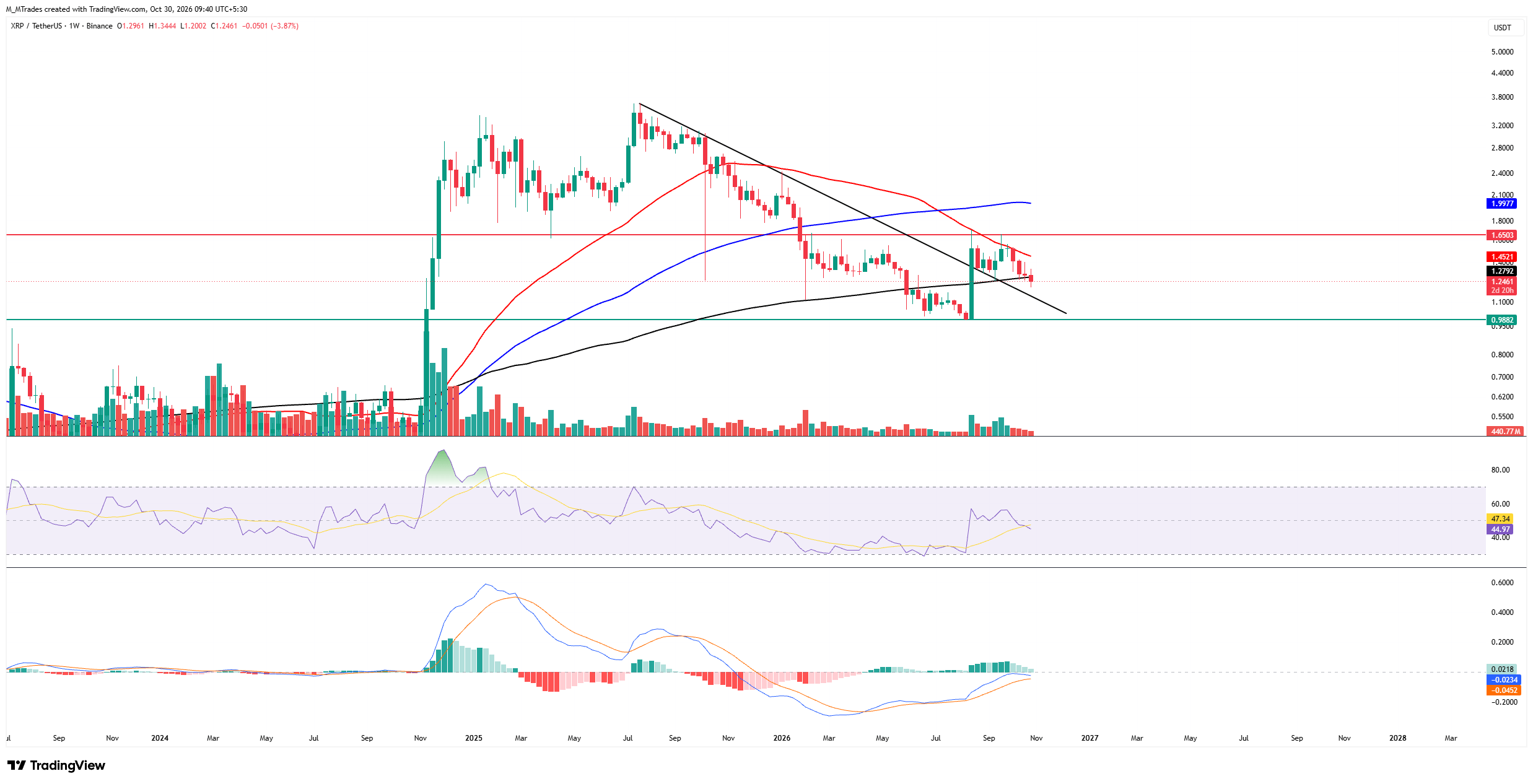
Meanwhile, XRP’s price action remains capped amid the macroeconomic headwinds, geopolitical tensions and the Binance wallets being hacked this week.
The Federal Reserve (Fed) held interest rates unchanged at 3.75%-4.00% at its two-day October policy meeting this week. However, the cautious hold, hawkish forward guidance, and inflation concerns amid Middle East tensions add to a cautious market backdrop and weigh on risky assets such as XRP.
Bearish pressure intensified on Thursday as reports of a potential $6 billion security breach at Binance exchange further rattled investors, with outflows flagged across multiple blockchain networks, including the XRP Ledger.
These developments led to a sharp correction, with XRP hitting a low of $1.200 on Friday and heading into the fourth straight week of losses since early October.
Could this development reshape institutional crypto adoption?
Overall, Ripple’s move to establish a national trust bank may not generate the kind of headlines that dominate social media, but its longer-term implications could be more significant. By bringing reserve management and custody under federal supervision, the firm is strengthening the institutional framework behind its stablecoin and other financial products, potentially making them more solid and accessible to traditional banking institutions.
In an industry still grappling with regulatory uncertainty, Ripple’s banking approval represents a meaningful step toward bridging traditional finance and the crypto sector, and its impact has enough potential to extend far beyond XRP’s price.
Ripple FAQs
Ripple is a payments company that specializes in cross-border remittance. The company does this by leveraging blockchain technology. RippleNet is a network used for payments transfer created by Ripple Labs Inc. and is open to financial institutions worldwide. The company also leverages the XRP token.
XRP is the native token of the decentralized blockchain XRPLedger. The token is used by Ripple Labs to facilitate transactions on the XRPLedger, helping financial institutions transfer value in a borderless manner. XRP therefore facilitates trustless and instant payments on the XRPLedger chain, helping financial firms save on the cost of transacting worldwide.
XRPLedger is based on a distributed ledger technology and the blockchain using XRP to power transactions. The ledger is different from other blockchains as it has a built-in inflammatory protocol that helps fight spam and distributed denial-of-service (DDOS) attacks. The XRPL is maintained by a peer-to-peer network known as the global XRP Ledger community.
XRP uses the interledger standard. This is a blockchain protocol that aids payments across different networks. For instance, XRP’s blockchain can connect the ledgers of two or more banks. This effectively removes intermediaries and the need for centralization in the system. XRP acts as the native token of the XRPLedger blockchain engineered by Jed McCaleb, Arthur Britto and David Schwartz.
Top Articles
1Ripple wins US banking approval: A turning point for the crypto sector?2Japanese Yen: Inflation risks support steady BoJ hikes – TD Securities3Euro retreats from day’s high as US Dollar rebounds, German HICP data awaited4GBP/JPY Price Forecast: Advances above 211.00, over one-week as JPY softens after BoJ5US Dollar: Midterm risks weigh on Greenback – ING6Dow Jones futures fall as tech earnings disappoint, Fed hike bets7Spain Consumer Price Index (MoM) in line with forecasts (0.6%) in October8Austria Gross Domestic Product (QoQ) rose from previous -0.1% to 0.2% in 3Q9Spain Harmonized Index of Consumer Prices (MoM) in line with forecasts (0.5%) in October


Get Started!
Sign up and access the Global Markets in less than 3 minutes

Connect With Us









Contacts
Phone: +61 2 8036 8388
Fax: +61 2 8036 8388
Email: support@tmgm.com



The information provided on this website is of a general nature only and does not constitute personal financial advice. Before acting on any information on this website, you should consider the suitability of the information in relation to your objectives, financial situation and needs. Investing in CFDs and FX Margin Contracts carries significant risks and is not suitable for all investors. You may lose more than your initial deposit. You do not own, or have, any interest in the underlying asset. We recommend that you seek independent advice and ensure you fully understand the risks involved before trading. It is important that you read and consider the disclosure document before you acquire any product listed on the website. The information and advertisements offered on this website are not intended for use by any person in any country or jurisdiction where such use would be contrary to local laws and regulations. The Products and Services offered on this website are not intended for residents of the United States, Malaysia and Thailand.
TMGM is authorized and regulated in various jurisdictions.
Trademax Australia Limited, trading as TMGM, is regulated by the Australian Securities and Investments Commission (ASIC), AFSL no. 436416 and is located at Level 28, One International Tower, 100 Barangaroo Avenue, 2000 Sydney, NSW Australia.
Email: support@tmgm.com.au
Trademax Global Limited, trading as TMGM, is authorized and regulated by the Vanuatu Financial Services Commission (VFSC), registration number 40356 and registered at 1276, Kumul Highway, Port Vila, Vanuatu, Republic of Vanuatu.
Email: support@tmgm.com
Trademax Global Markets (SE) Limited, trading as TMGM, is authorized and regulated by the Financial Services Authority (FSA) of Seychelles, with license number SD224. The company is registered at Office No 13, Providence Estate ABIS Centre, Mahe, Seychelles.
Email: support@tmgm.com
Trademax Global Markets (International) Pty Ltd, trading as TMGM, is authorized and regulated by the Financial Services Commission, Mauritius (FSC) with license no. GB22201012, and registered at 33, Edith Cavell Street C/o IQ EQ Fund Services (Mauritius) Ltd Port Louis, 11324 Mauritius.
Email: support@tmgm.com
Copyright © TMGM. All rights reserved