

Trading
Explore a wide range of markets with competitive pricing, deep liquidity, and advanced trading tools.
Learn More 
Platform
Trade seamlessly with TMGM's powerful platform, built for speed, precision, and a superior trading experience.
Learn More Trading Platform
Academy
Learn the fundamentals of trading with beginner-friendly resources, including guides, webinars, and market insights.
Learn More News & Analysis
Get real-time market updates and expert analysis to stay ahead of trading opportunities
Learn More News & Analysis
About
Learn what sets TMGM apart — our global presence, regulatory strength, and commitment to innovation in trading.
Learn More Why Choose TMGM
Sponsorship
Ripple Price Forecast: XRP risks further losses as bears eye $1
- XRP extends its decline, trading below $1.09 on Monday after falling over 10% last week.
- US-listed XRP spot ETF recorded net outflows of $529,510 last week, ending a two-week streak of inflows.
- Weakening metrics and unfavorable macroeconomic backdrop continue to weigh on XRP’s recovery prospects.
Ripple (XRP) extends its decline, trading below $1.09 on Monday after falling more than 10% last week. Weakening institutional demand adds downside pressure, as XRP spot Exchange-Traded Funds (ETFs) recorded $529,510 in net outflows last week, ending a two-week streak of inflows. Meanwhile, deteriorating metrics and an unfavorable macroeconomic backdrop continue to limit XRP’s recovery prospects, with bears increasingly eyeing the psychological $1 level.

Cooling institutional demand
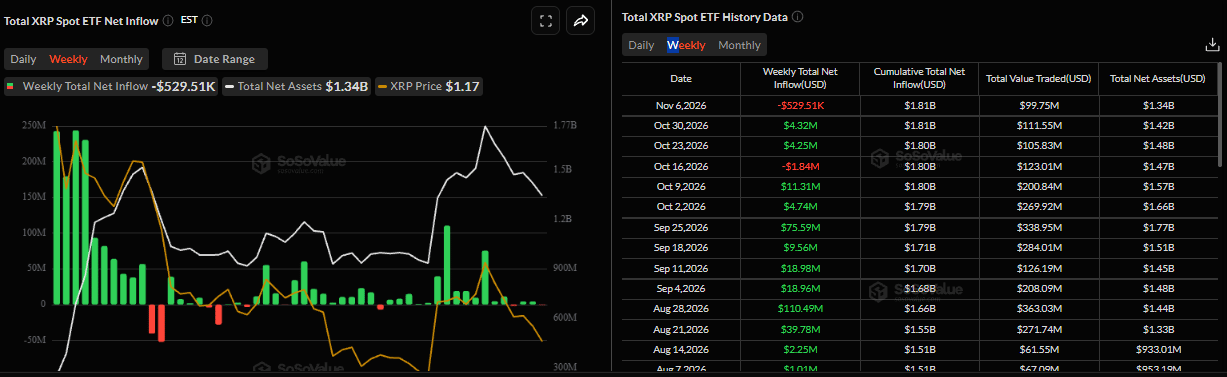
Institutional demand for XRP cooled last week. SoSoValue data shows XRP spot ETFs recorded net outflows of $529,510 last week, ending a two-week run of net inflows. If this outflow trend continues and intensifies throughout this week, it could put additional pressure on XRP, pushing its price into a deeper correction.
Weakening metrics cap XRP
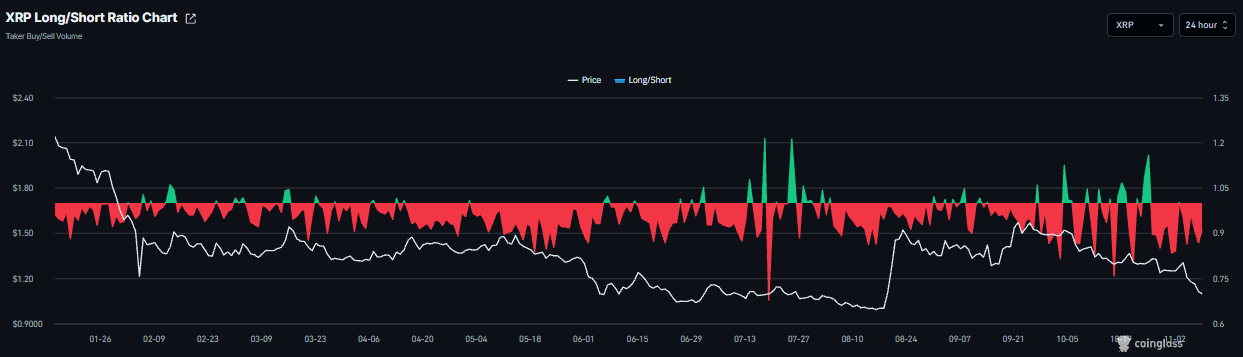
CoinGlass’ long-to-short ratio for XRP read 0.91 on Monday, nearing the lowest level over a month. A ratio below one indicates bearish sentiment, as traders bet that asset prices will fall.
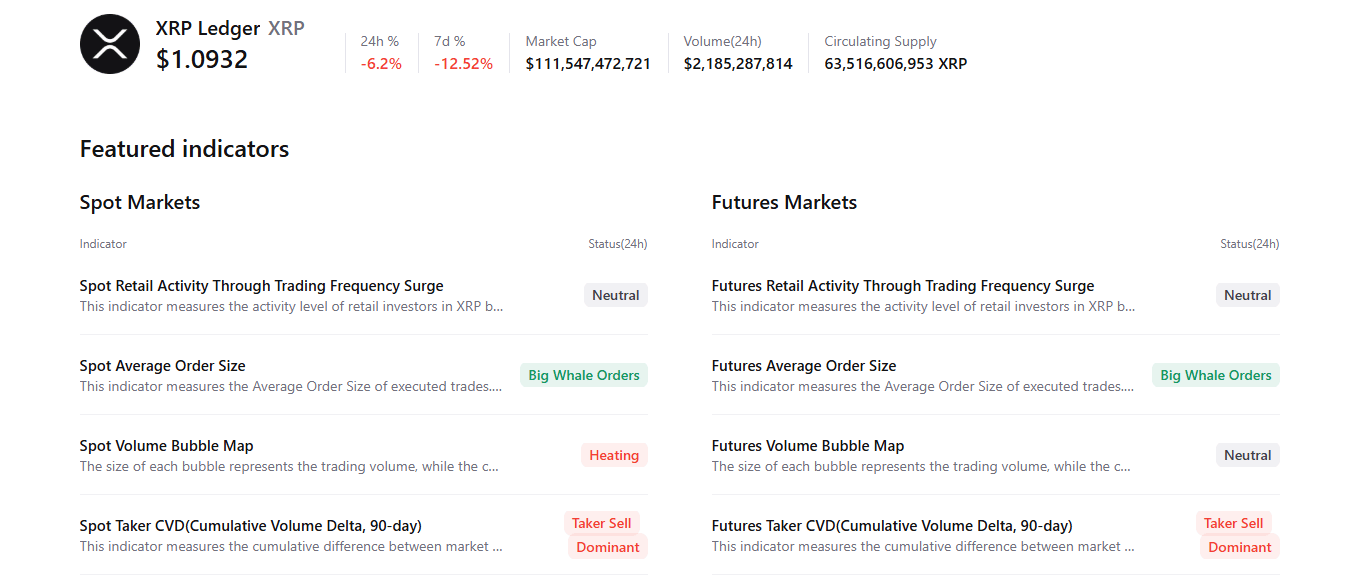
CryptoQuant’s summary data also shows a bearish outlook for Ripple. XRP’s spot and futures markets show large whale orders and sell-side dominance. In addition, the spot market shows heating conditions, highlighting a bearish, cautious sentiment bias among Ripple traders.
Macroeconomic conditions cap XRP
On the macroeconomic front, Nonfarm Payrolls (NFP) data released last week weighed on risk assets. Stronger-than-expected US payrolls reinforced expectations that the US Federal Reserve (Fed) could keep interest rates higher for longer. Higher interest rates increase the opportunity cost of holding non-yielding assets such as XRP and reduce investor appetite for riskier investments.
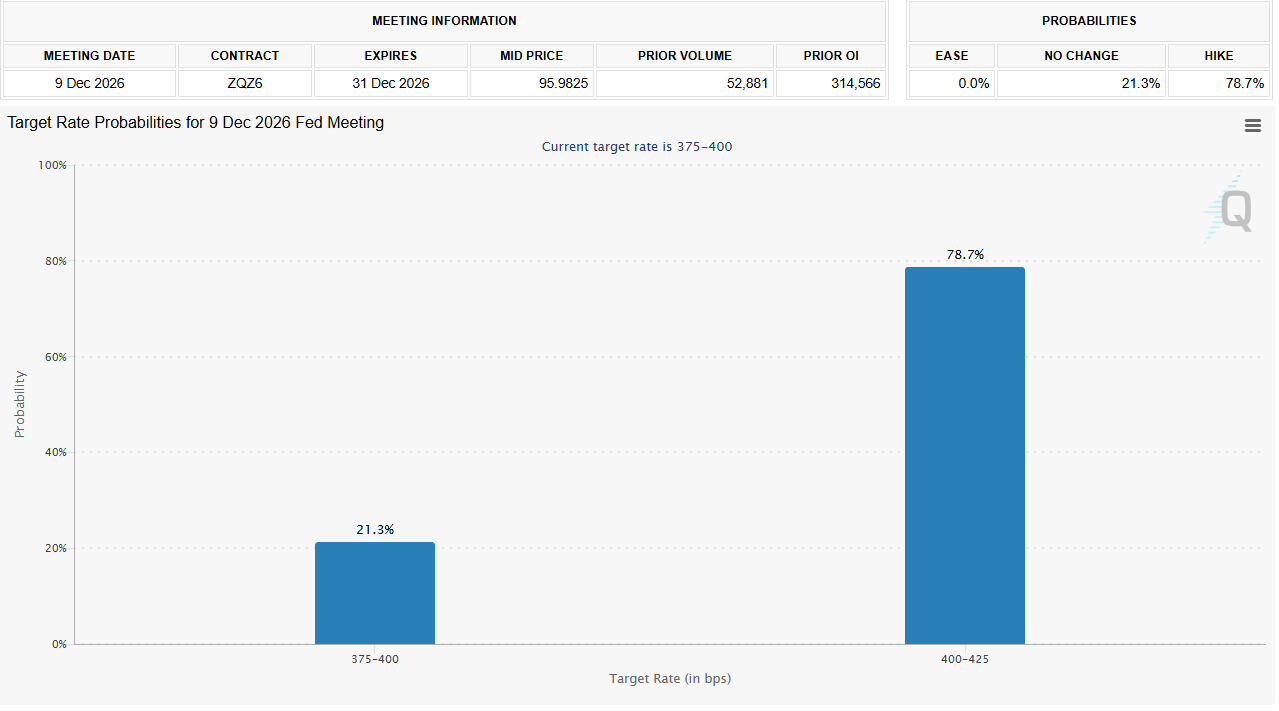
According to the CME FedWatch tool, traders are currently pricing in about 78.7% odds that the Fed will raise rates in December, up from 72.8% before the US jobs report. This macroeconomic backdrop could continue to weigh on XRP’s recovery prospects.
XRP technical outlook: Bears eye $1 psychological mark
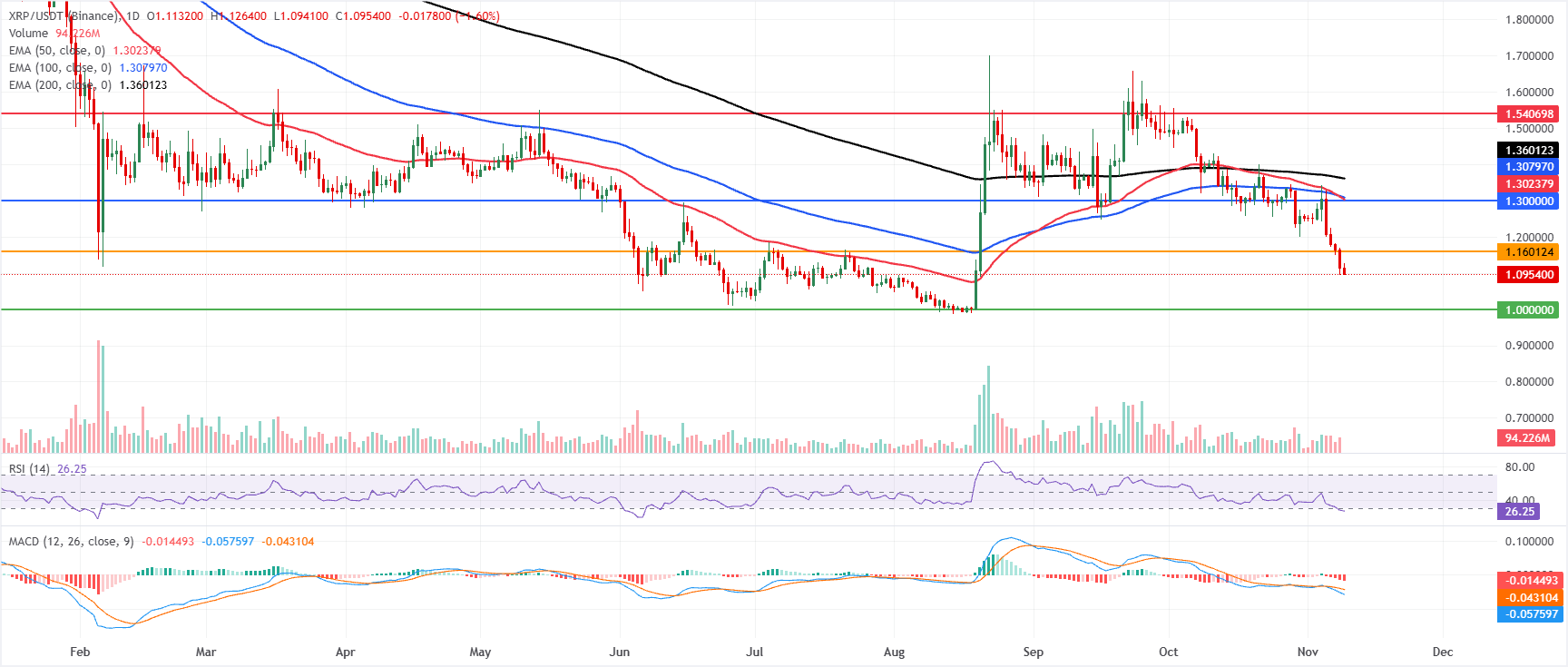
XRP price trades at $1.095 at the time of writing on Monday, maintaining a bearish near-term bias as it holds well below the 50-day, 100-day, and 200-day Exponential Moving Averages (EMAs) clustered between $1.302 and $1.360.
The Relative Strength Index (RSI) at 26 sits in oversold territory on the daily chart, hinting at stretched downside conditions. Yet, the Moving Average Convergence Divergence (MACD) histogram remains negative, reinforcing persistent selling pressure while the price consolidates near recent lows.
On the topside, initial resistance is seen at $1.160, with stronger supply aligning at $1.300 and the 50-day EMA at $1.302, followed by the 100-day EMA at $1.307 and the 200-day EMA at $1.360, which together cap any sustained recovery attempts.
On the downside, the nearest notable support is the psychological $1.000 handle, where buyers would be expected to defend.
(The technical analysis of this story was written with the help of an AI tool. Know more.)
Ripple FAQs
Ripple is a payments company that specializes in cross-border remittance. The company does this by leveraging blockchain technology. RippleNet is a network used for payments transfer created by Ripple Labs Inc. and is open to financial institutions worldwide. The company also leverages the XRP token.
XRP is the native token of the decentralized blockchain XRPLedger. The token is used by Ripple Labs to facilitate transactions on the XRPLedger, helping financial institutions transfer value in a borderless manner. XRP therefore facilitates trustless and instant payments on the XRPLedger chain, helping financial firms save on the cost of transacting worldwide.
XRPLedger is based on a distributed ledger technology and the blockchain using XRP to power transactions. The ledger is different from other blockchains as it has a built-in inflammatory protocol that helps fight spam and distributed denial-of-service (DDOS) attacks. The XRPL is maintained by a peer-to-peer network known as the global XRP Ledger community.
XRP uses the interledger standard. This is a blockchain protocol that aids payments across different networks. For instance, XRP’s blockchain can connect the ledgers of two or more banks. This effectively removes intermediaries and the need for centralization in the system. XRP acts as the native token of the XRPLedger blockchain engineered by Jed McCaleb, Arthur Britto and David Schwartz.
Top Articles
1Ripple Price Forecast: XRP risks further losses as bears eye $12New Zealand Dollar jumps to 0.5600 after first New Zealand's election results3US Dollar Index: Fed path and CPI focus – Deutsche Bank4Indian Rupee hovers near multi-month highs as foreign inflows support Indian equities5Forex Today: US Dollar retreats following NFP-inspired rally6Germany Trade Balance s.a. came in at €15.6B below forecasts (€19.2B) in September7Germany Exports (MoM) registered at 2% above expectations (0.5%) in September8Germany Imports (MoM) came in at 4.2%, above expectations (0.5%) in September9GBP/USD Price Forecast: Holds firm above 1.3350, but remains capped below key moving average


Get Started!
Sign up and access the Global Markets in less than 3 minutes

Connect With Us









Contacts
Phone: +61 2 8036 8388
Fax: +61 2 8036 8388
Email: support@tmgm.com



The information provided on this website is of a general nature only and does not constitute personal financial advice. Before acting on any information on this website, you should consider the suitability of the information in relation to your objectives, financial situation and needs. Investing in CFDs and FX Margin Contracts carries significant risks and is not suitable for all investors. You may lose more than your initial deposit. You do not own, or have, any interest in the underlying asset. We recommend that you seek independent advice and ensure you fully understand the risks involved before trading. It is important that you read and consider the disclosure document before you acquire any product listed on the website. The information and advertisements offered on this website are not intended for use by any person in any country or jurisdiction where such use would be contrary to local laws and regulations. The Products and Services offered on this website are not intended for residents of the United States, Malaysia and Thailand.
TMGM is authorized and regulated in various jurisdictions.
Trademax Australia Limited, trading as TMGM, is regulated by the Australian Securities and Investments Commission (ASIC), AFSL no. 436416 and is located at Level 28, One International Tower, 100 Barangaroo Avenue, 2000 Sydney, NSW Australia.
Email: support@tmgm.com.au
Trademax Global Limited, trading as TMGM, is authorized and regulated by the Vanuatu Financial Services Commission (VFSC), registration number 40356 and registered at 1276, Kumul Highway, Port Vila, Vanuatu, Republic of Vanuatu.
Email: support@tmgm.com
Trademax Global Markets (SE) Limited, trading as TMGM, is authorized and regulated by the Financial Services Authority (FSA) of Seychelles, with license number SD224. The company is registered at Office No 13, Providence Estate ABIS Centre, Mahe, Seychelles.
Email: support@tmgm.com
Trademax Global Markets (International) Pty Ltd, trading as TMGM, is authorized and regulated by the Financial Services Commission, Mauritius (FSC) with license no. GB22201012, and registered at 33, Edith Cavell Street C/o IQ EQ Fund Services (Mauritius) Ltd Port Louis, 11324 Mauritius.
Email: support@tmgm.com
Copyright © TMGM. All rights reserved