
News & AnalysisCareer

On the sidelines of the Asia-Pacific Economic Cooperation (APEC) summit in Shenzhen, China, US President Donald Trump held talks with his Russian and Chinese counterparts, Vladimir Putin and Xi Jinping.
Following their historic trilateral talks, the three leaders issued a "joint declaration of peace", the Guardian reported. The document, however, did not mention the wars in Ukraine and Iran triggered by two of the participants.
Plans to expand petroleum production and supply were set out in the declaration, which stated that "nuclear war cannot be won and must never be fought". The leaders also said they were "committed to reform the UN" so that it could respond more effectively to global challenges.
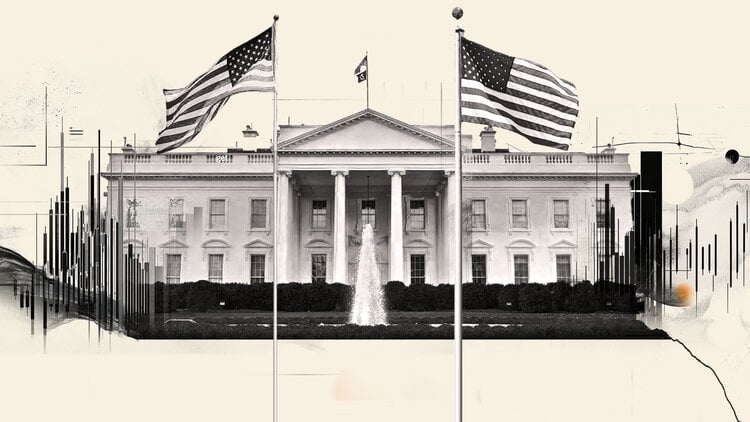
During his visit to China, Trump said he had discussed artificial intelligence (AI) with Xi Jinping. The leaders agreed that guardrails were a good thing.
Investors’ willingness to take on risk over a given period is commonly described in financial markets using the terms “risk-on” and “risk-off”. Optimism about the outlook characterises a risk-on market, with investors more inclined to purchase riskier assets. By contrast, concerns about the future prompt investors in a risk-off market to ‘play it safe’. They favour lower-risk assets that offer greater certainty of a return, even if that return is relatively modest.
A favourable growth outlook generally lifts equities and most commodities, apart from gold, during risk-on periods. Stronger demand also supports the currencies of major commodity-exporting countries, while cryptocurrencies advance. When markets turn risk-off, bonds typically gain, particularly major government bonds. Gold performs well too, alongside safe-haven currencies including the Japanese yen, Swiss franc and US dollar.
Risk-on conditions generally support the Australian dollar (AUD), Canadian dollar (CAD) and New Zealand dollar (NZD), as well as less widely traded currencies such as the rouble (RUB) and South African rand (ZAR). Growth in their economies depends heavily on commodity exports. During these periods, investors anticipate that stronger economic activity will increase future demand for raw materials, tending to lift commodity prices and, in turn, these currencies.
Risk-off periods typically favour three major currencies: the US dollar (USD), Japanese yen (JPY) and Swiss franc (CHF). The dollar benefits from its status as the world’s reserve currency and from crisis-driven purchases of US government debt. Investors regard that debt as safe because the world’s largest economy is unlikely to default. Demand for Japanese government bonds supports the yen: a large share of those bonds is held by domestic investors who are unlikely to sell them off, even during a crisis. For the Swiss franc, the support comes from Switzerland’s strict banking laws, which provide investors with enhanced capital protection.







Phone: +61 2 8036 8388
Fax: +61 2 8036 8388
Email: support@tmgm.com



The information provided on this website is of a general nature only and does not constitute personal financial advice. Before acting on any information on this website, you should consider the suitability of the information in relation to your objectives, financial situation and needs. Investing in CFDs and FX Margin Contracts carries significant risks and is not suitable for all investors. You may lose more than your initial deposit. You do not own, or have, any interest in the underlying asset. We recommend that you seek independent advice and ensure you fully understand the risks involved before trading. It is important that you read and consider the disclosure document before you acquire any product listed on the website. The information and advertisements offered on this website are not intended for use by any person in any country or jurisdiction where such use would be contrary to local laws and regulations. The Products and Services offered on this website are not intended for residents of the United States, Malaysia and Thailand.
TMGM is authorized and regulated in various jurisdictions.
Trademax Australia Limited, trading as TMGM, is regulated by the Australian Securities and Investments Commission (ASIC), AFSL no. 436416 and is located at Level 28, One International Tower, 100 Barangaroo Avenue, 2000 Sydney, NSW Australia.
Email: support@tmgm.com.au
Trademax Global Limited, trading as TMGM, is authorized and regulated by the Vanuatu Financial Services Commission (VFSC), registration number 40356 and registered at 1276, Kumul Highway, Port Vila, Vanuatu, Republic of Vanuatu.
Email: support@tmgm.com
Trademax Global Markets (SE) Limited, trading as TMGM, is authorized and regulated by the Financial Services Authority (FSA) of Seychelles, with license number SD224. The company is registered at Office No 13, Providence Estate ABIS Centre, Mahe, Seychelles.
Email: support@tmgm.com
Trademax Global Markets (International) Pty Ltd, trading as TMGM, is authorized and regulated by the Financial Services Commission, Mauritius (FSC) with license no. GB22201012, and registered at 33, Edith Cavell Street C/o IQ EQ Fund Services (Mauritius) Ltd Port Louis, 11324 Mauritius.
Email: support@tmgm.com
Copyright © TMGM. All rights reserved

