

Savdo
Raqobatbardosh narxlar, chuqur likvidlik va ilg‘or savdo vositalari bilan keng turdagi bozorlarni kashf eting.
Batafsil ma’lumot 
Platforma
TMGM’ning tezlik, aniqlik va yuqori savdo tajribasi uchun yaratilgan kuchli platformasi bilan uzluksiz savdo qiling.
Batafsil ma’lumot Savdo platformasi
Savdo vositalari
Akademiya
Boshlovchilar uchun qulay resurslar, jumladan qo‘llanmalar, vebinarlar va bozor tahlillari orqali savdoning asoslarini o‘rganing.
Batafsil ma’lumot Yangiliklar va tahlil
Savdo imkoniyatlaridan oldinda bo‘lish uchun bozor yangilanishlari va ekspert tahlillarini real vaqt rejimida oling
Batafsil ma’lumot Yangiliklar va tahlil
Haqida
TMGMni boshqalardan ajratib turadigan jihatlarni bilib oling — bizning global mavjudligimiz, tartibga solishdagi mustahkamligimiz va savdoda innovatsiyalarga sodiqligimiz.
Batafsil ma’lumot Nega TMGMni tanlash kerak
Australian Dollar holds gains above 0.6600 despite weaker PMI data
- AUD/USD gains traction to around 0.6630 in Monday’s early Asian session.
- Bets on Fed tightening could support the US Dollar and cap the pair’s upside.
- S&P Global Flash Australia Composite PMI contracted at the fastest pace in 5 years.
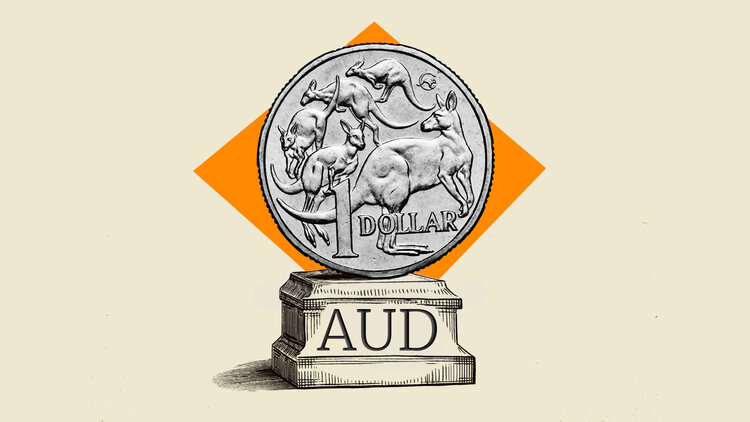
The AUD/USD pair holds positive ground near 0.6630 during the early Asian session on Monday. The US Dollar (USD) softened against the Australian Dollar (AUD) as US Treasury yields fell sharply amid concerns over the AI trade. However, the potential upside for the pair might be limited amid weaker Australian economic data.
The Greenback and US Treasury yields dropped in the previous session as a multitude of AI-related concerns weighed on global stocks, and Anthropic’s record market debut on Thursday did little to revive investor confidence. Still, strategists see the USD continuing to draw some support from the outlook for a hawkish Fed.
“I think the momentum has stalled for the dollar ... but I think it’s a little bit early to pick a top for the dollar,” said Marc Chandler, chief market strategist at Bannockburn Capital Markets.
On the Aussie front, Australia's Unemployment Rate surged to 4.9% in October, up from 4.7% in September in seasonally adjusted terms. RBA governor Michele Bullock said that an increase in Unemployment will be necessary to "take enough heat out of the labour market" to ease inflation pressure.
Additionally, Australian business conditions contracted at their fastest pace in five years in November. The preliminary reading of Australia's S&P Global Manufacturing Purchasing Managers' Index (PMI) eased to 48.7 in November, compared to 49.6 in October.
The S&P Global Services PMI fell to 46.2 in November, versus 48.5 prior. The Composite PMI dropped to 46.1 in November, versus 48.2 prior. This figure registered the lowest since August 2021.
Aussie under pressure as weak jobs data fuels RBA rate-cut debate
Analysts at Commerzbank highlight that “yesterday’s Australian labour market data disappointed significantly,” with employment falling “sharply by 43,500” against expectations for a 25,000 increase. The October release “thus follow[s] an already weak September,” while the unemployment rate climbed to “4.9%, its highest level since late 2021.” In their view, the Australian labour market “continues to cool, likely reflecting in particular the impact of higher interest rates and the associated weakness in demand.”
Against this backdrop, Commerzbank argues that “the RBA’s rate-hiking cycle likely came to an end with its latest meeting, which is also what markets are pricing in.” They note that they had “recently expected no further rate hikes,” but point out that “markets are now pricing in around 1.5 rate cuts by the end of 2027,” a move they “still consider premature based on the latest labour market data alone.” While acknowledging that “clearly, the risks of a more pronounced economic slowdown have increased,” the bank stresses that “the incoming data will first have to confirm that this trend is continuing.”
Looking ahead, Commerzbank sees upcoming releases as pivotal: “The next labour market data will therefore be key to determining whether markets’ rate-cut bets are justified, while inflation data will remain in focus as well.” They flag that “the October figures are due next week,” and caution that “if inflation comes in as expected or even slightly lower, this would likely lend further support to rate-cut expectations.” In that scenario, “the Aussie could then lose some more ground, although quite a bit is already priced in given current rate-cut expectations.” Conversely, “if inflation instead surprises to the upside, the AUD could benefit as markets would likely scale back some of their rate-cut expectations.”
Cook flags insufficient restraint, reinforces hawkish Fed bias
Fed’s Cook delivers a distinctly more hawkish tone, with the 8.6/10 FXS Speechtracker score standing notably above the 7.7/10 historical average, underscoring a stronger-than-usual push for tighter policy. The emphasis that the current monetary stance is “not providing needed restraint,” that September’s hike was “not enough,” and that delaying further moves risks inflation becoming embedded signals a clear preference for additional tightening amid strong US growth and a healthy labor market. Cook’s characterization of current inflation as “of great concern” and financial conditions as “too accommodative” reinforces the message that the Fed is inclined to lean harder against persistent price pressures, a backdrop typically supportive of the Dollar and yields.
The FXS Fed Sentiment Index rose by 1.58 points to 152.14, firmly in hawkish territory and consistent with the elevated FXS Speechtracker score. This move confirms that Cook’s remarks have shifted perceived Fed policy bias further toward additional tightening, with markets likely to price in higher-for-longer rates and a supportive environment for the Dollar relative to lower-yielding peers.
Technical Analysis: AUD/USD retains a negative outlook below the 100-day SMA
In the daily chart, AUD/USD maintains a bearish near-term bias as spot remains decisively below the 100-day simple moving average (SMA) and the Bollinger middle band. The pair is holding slightly above the Bollinger lower band, while the Relative Strength Index (14) around 24 hints at oversold conditions that could slow the downside rather than trigger an immediate recovery.
On the topside, initial resistance is located at the Bollinger middle band near 0.6860, ahead of the 100-day SMA at 0.7010, with a subsequent barrier at the upper Bollinger band around 0.7145. On the downside, immediate support is provided by the Bollinger lower band at 0.6580, and a clear break below this floor would open the path to further weakness in the short term.
(The technical analysis of this story was written with the help of an AI tool. Know more.)
Australian Dollar FAQs
One of the most significant factors for the Australian Dollar (AUD) is the level of interest rates set by the Reserve Bank of Australia (RBA). Because Australia is a resource-rich country another key driver is the price of its biggest export, Iron Ore. The health of the Chinese economy, its largest trading partner, is a factor, as well as inflation in Australia, its growth rate and Trade Balance. Market sentiment – whether investors are taking on more risky assets (risk-on) or seeking safe-havens (risk-off) – is also a factor, with risk-on positive for AUD.
The Reserve Bank of Australia (RBA) influences the Australian Dollar (AUD) by setting the level of interest rates that Australian banks can lend to each other. This influences the level of interest rates in the economy as a whole. The main goal of the RBA is to maintain a stable inflation rate of 2-3% by adjusting interest rates up or down. Relatively high interest rates compared to other major central banks support the AUD, and the opposite for relatively low. The RBA can also use quantitative easing and tightening to influence credit conditions, with the former AUD-negative and the latter AUD-positive.
China is Australia’s largest trading partner so the health of the Chinese economy is a major influence on the value of the Australian Dollar (AUD). When the Chinese economy is doing well it purchases more raw materials, goods and services from Australia, lifting demand for the AUD, and pushing up its value. The opposite is the case when the Chinese economy is not growing as fast as expected. Positive or negative surprises in Chinese growth data, therefore, often have a direct impact on the Australian Dollar and its pairs.
Iron Ore is Australia’s largest export, accounting for $118 billion a year according to data from 2021, with China as its primary destination. The price of Iron Ore, therefore, can be a driver of the Australian Dollar. Generally, if the price of Iron Ore rises, AUD also goes up, as aggregate demand for the currency increases. The opposite is the case if the price of Iron Ore falls. Higher Iron Ore prices also tend to result in a greater likelihood of a positive Trade Balance for Australia, which is also positive of the AUD.
The Trade Balance, which is the difference between what a country earns from its exports versus what it pays for its imports, is another factor that can influence the value of the Australian Dollar. If Australia produces highly sought after exports, then its currency will gain in value purely from the surplus demand created from foreign buyers seeking to purchase its exports versus what it spends to purchase imports. Therefore, a positive net Trade Balance strengthens the AUD, with the opposite effect if the Trade Balance is negative.
Eng yaxshi maqolalar
148,7: Avstraliyada S&P Global ishlab chiqarish sektori xarid menejerlari indeksi (PMI) noyabr oyida pasaydi2Yangi Zelandiyada chakana savdo hajmi III chorakda oldingi chorakka nisbatan 2,2% ga oshdi, kutilgan oʻsish esa 0,5% edi3Yevro AQSh inflyatsiyasi diqqat markazida boʻladigan haftaga narxlarda allaqachon hisobga olingan foiz stavkasi oshirilishi bilan kirib bormoqda4Britaniya funt sterlingi PMI haftasiga inflyatsiya susayishi va ish haqi oʻsishi sekinlashishi bosimi ostida kirib bormoqda5Sunʼiy intellekt sektoridagi keskin sotuvlar kengaygani sari Dow Jones Industrial Average indeksi ketma-ket beshinchi kun pasaymoqda6Xitoy yuani: AQSh dollariga nisbatan qisqa muddatli pasayish nazorat choralari joriy etilishiga sabab boʻldi - Commerzbank7Malayziya ringgiti: Chiplar eksportiga cheklovlar va obligatsiyalar daromadliligi MYRga AQSh dollariga nisbatan bosim oʻtkazmoqda – OCBC8Xitoy yuani: qatʼiy boshqaruv ostida bosqichma-bosqich mustahkamlanish – BNY9Fed va RBA siyosati boʻyicha kutilmalar oʻrtasidagi tafovut ortib borar ekan, Avstraliya dollari bosim ostida qolmoqda


Boshlang!
Ro‘yxatdan o‘ting va 3 daqiqadan kamroq vaqt ichida Global bozorlariga kirish imkoniga ega bo‘ling

Biz bilan bog‘laning









Kontaktlar
Telefon: +61 2 8036 8388
Faks: +61 2 8036 8388
Email: support@tmgm.com



Ushbu veb-saytda taqdim etilgan ma’lumotlar faqat umumiy xususiyatga ega bo‘lib, shaxsiy moliyaviy maslahat hisoblanmaydi. Ushbu veb-saytdagi har qanday ma’lumot asosida harakat qilishdan oldin, ma’lumotning sizning maqsadlaringiz, moliyaviy ahvolingiz va ehtiyojlaringizga mosligini ko‘rib chiqishingiz kerak. CFD va FX Margin shartnomalariga sarmoya kiritish sezilarli xavflarni o‘z ichiga oladi va barcha investorlar uchun mos emas. Siz boshlang‘ich depozitingizdan ko‘proq yo‘qotishingiz mumkin. Siz asosiy aktivga egalik qilmaysiz va unda hech qanday manfaatga ega emassiz. Savdo qilishdan oldin mustaqil maslahat olishni va ishtirok etuvchi xavflarni to‘liq tushunishingizni tavsiya qilamiz. Veb-saytda keltirilgan har qanday mahsulotni xarid qilishdan oldin oshkor qilish hujjatini o‘qib chiqishingiz va ko‘rib chiqishingiz muhimdir. Ushbu veb-saytda taklif etilgan ma’lumotlar va reklama materiallari bunday foydalanish mahalliy qonunlar va qoidalarga zid bo‘ladigan har qanday mamlakat yoki yurisdiksiyadagi shaxslar tomonidan foydalanish uchun mo‘ljallanmagan. Ushbu veb-saytda taklif etilgan Mahsulotlar va Xizmatlar AQSh, Malayziya va Tailand rezidentlari uchun mo‘ljallanmagan.
TMGM turli yurisdiksiyalarda vakolatli va tartibga solinadi.
Trademax Australia Limited, TMGM nomi ostida faoliyat yuritadi, Avstraliya Qimmatli qog‘ozlar va investitsiyalar komissiyasi (ASIC) tomonidan tartibga solinadi, AFSL raqami 436416 va manzili: Level 28, One International Tower, 100 Barangaroo Avenue, 2000 Sydney, NSW Australia.
Email: support@tmgm.com.au
Trademax Global Limited, TMGM nomi ostida faoliyat yuritadi, Vanuatu Moliyaviy Xizmatlar Komissiyasi (VFSC) tomonidan vakolatli va tartibga solinadi, ro‘yxatga olish raqami 40356 va ro‘yxatdan o‘tgan manzili: 1276, Kumul Highway, Port Vila, Vanuatu, Vanuatu Respublikasi.
Email: support@tmgm.com
Trademax Global Markets (SE) Limited, TMGM nomi ostida faoliyat yuritadi, Seyshel orollari Moliyaviy Xizmatlar Boshqarmasi (FSA) tomonidan 224-sonli SD litsenziyasi bilan vakolatli va tartibga solinadi. Kompaniya Office No 13, Providence Estate ABIS Centre, Mahe, Seychelles manzilida ro‘yxatdan o‘tgan.
Email: support@tmgm.com
Trademax Global Markets (International) Pty Ltd, TMGM nomi ostida faoliyat yuritadi, Mauritius Moliyaviy Xizmatlar Komissiyasi (FSC) tomonidan GB22201012 litsenziya raqami bilan vakolatli va tartibga solinadi hamda 33, Edith Cavell Street C/o IQ EQ Fund Services (Mauritius) Ltd Port Louis, 11324 Mauritius manzilida ro‘yxatdan o‘tgan.
Email: support@tmgm.com
Mualliflik huquqi © TMGM. Barcha huquqlar himoyalangan